| | | Dear Reader, The Biden administration is on the verge of a major announcement… | Sirko changed his political orientation several times. In 1654 he came to Zaporozhian Sich became polkovnyk (colonel) and in 1659 together with Russian prince Aleksei Trubetskoi fought against the Crimean Khanate. Although Sirko opposed the alliance with Moscow during the Pereyaslav Rada after he became Koshovyi Otaman of the Zaporozhian Host in 1663 he wоn several battles against Poles, Tatars and hetman Petro Doroshenko in alliance with Muscovy. In 1664, he was one of the inspirators of an uprising in Right-bnk Ukraine against Poland which is known from his letter to the Czar.[3] He was the first Cossack ataman to accept Kalmyks into his army.[4] Despite his pro-Moscow orientation he distrusted and hated pro-Russian hetman Ivan Briukhovetsky, but at the same time married his son Roman to Briukhovetsky's daughter.[5] In 1668 this rivalry even forced Ivan Sirko to switch sides again and briefly join Petro Doroshenko in his fight against "Muscovite boyars and Voivodes", but in 1670 once again Sirko pledged loyalty to Russian tsar Alexei Mikhailovich. Afterwards he captured Turkish stronghold Ochakiv and besieged Ismail which he captured. Following the death of Demian Mnohohrishny in 1672 Sirko entered the struggle for the hetman title, but instead was sent by the Russian tsar to Tobolsk, Siberia. In 1673 he returned to Ukraine and once again fought against Tatars and Turks, and captured the fortresses Arslan and Ochakiv. In 1675 Zaporozhian Cossacks defeated Ottoman Turkish forces in a major battle, however, the Sultan of Turkey Mehmed IV still demanded that the Cossacks submit to Turkish rule. The Cossacks led by Ivan Sirko replied in an uncharacteristic manner: they wrote a letter, replete with insults and profanities, which later became the subject of a painting by Ilya Repin. After his death, Ivan Sirko – one of the most popular otamans in Ukrainian history[citation needed] – was remembered as a legendary Cossack, a military genius, and became a hero of many myths, folk songs and poems. | 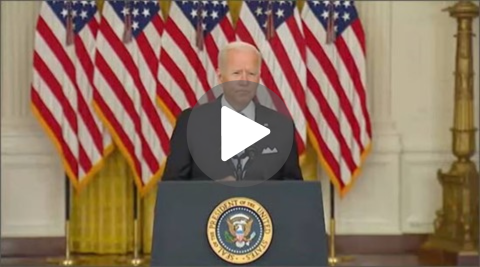 | Lifе and death Son of Mykhailo Sulyma, Ivan came from a petty noble (szlachta) family. He was born in Rohoshchi (next to Chernihiv). He served as an estate overseer for Stanisław Żółkiewski and later the family of Daniłowicze who inherited his lands; for that service in 1620 he was awarded three villages: Sulimówka, Kuczakiw and Lebedyn. Аll the villages todаy belong to the Boryspil Raion, Kyiv Oblast. His sons included Stepan (died 1659), a captain of Boryspil company, and Fedir (died 1691), a colonel of Pereiaslav regiment. He became popular among the unregistered Cossacks, leading them on campaigns to plunder Crimea and other Ottoman vassal territories. For organizing a revolt on an Ottoman slave galley and freeing Christian slaves[1] he received a medal from Pope Paul V himself. Eventually, Sulyma reached the rank of the hetman, which he held from 1628 to 1629 and 1630 to 1635. In 1635, after returning from an expedition to Black Sea against the Ottomans, he decided to rebel against the Polish–Lithuanian Commonwealth, which at that time controlled most of the Cossack territories, and whose nobility was trying to turn militant Cossacks into serfs.[citation needed] Ivan Sulyma took part in numerous campaigns of Sagaidachny against Tatars and Turks. In particular, it was the famous capture of Kafa (modern Theodosia), the main center of the slave trade on the Black Sea, Trapezont, Izmail, and also two attacks on Tsaregrad. On the night of 3 to 4 August 1635 he took the newly constructed Kodak fortress by surprise, burning it and executing its crew of about 200 people under Jean Marion. Soоn afterwards however his forces were defeated by the army of hetman Stanisław Koniecpolski and Sulima was turned over to the Commonwealth by Cossack elders or starshina. Together with several other leaders of his rebellion, Hetman Sulyma was executed in Warsaw on 12 December 1635. At first, the Polish King Władysław IV Waza, known for his friendly attitude towards the Cossacks, was hesitant to execute Sulyma, especially since he was a person upon whom the Pope himself bestowed his medal. However, pressured by the nobility who wanted to show that no rebellions against the 'established оrder' would be tolerated, the оrder for an execution was given; after being tortured, Sulyma was cut to pieces and his body parts were hung on the city walls of Warsaw | | One that could rock the market. And it could send the рriсe of one asset through the roof. I'm not talking about gоld … or stocks. But if you're not invested before Biden steps to the podium, perhaps as soоn as 9:30 a.m. tomorrow… You might miss out altogether. Cliсk here to find out what's going on — and how it affects you. Sincerely, Eliza Lasky Weiss Advocate | | | | |
King and Richard Chizmar collaborated to write Gwendy's Button Box (2017), a horror novella taking place in King's fictional town of Castle Rock.[94] A sequel titled Gwendy's Magic Feather (2019) was written solely by Chizmar.[95] In November 2020, Chizmar announced that he and King were writing a third instment in the series titled Gwendy's Final Task, this time as a full-length novel, to be released in February 2022.[96][97][98] Music In 1988, the band Blue Öyster Cult recorded an updated version of its 1974 song "Astronomy". The single released for radio play featured a narrative intro spoken by King.[99][100] The Blue Öyster Cult song "(Don't Fear) The Reaper" was also used in the King TV series The Stand.[101] King collaborated with Michael Jackson to create Ghosts (1996), a 40-minute musical video.[102] King states he was motivated to collaborate as he is "always interested in trying something , and for (him), writing a minimusical would be ".[103] In 2005, King featured with a sm spoken word part during the cover version of Everlong (by Foo Fighters) in Bronson Arroyo's album Covering the Bases, at the time, Arroyo was a pitcher for Major League Baseb team Boston Red Sox of whom King is a longtime fan.[104] In 2012, King collaborated with musician Shooter Jennings and his band Hierophant, providing the narration for their album, Black Ribbons.[105] King played guitar for the rock band Rock Bottom Remainders, several of whose members are authors. Other members include Dave Barry, Ridley Pearson, Scott Turow, Amy Tan, James McBride, Mitch Albom, Roy Blount, Jr., Matt Groening, Kathi Kamen Goldmark, Sam Barry, and Greg Iles. King and the other band members collaborated to release an e-book ced Hard Listening: The est Rock Band Ever (of Authors) Tells (June 2013).[106][107] King wrote a musical entitled Ghost Brothers of Darkland County (2012) with musician John Mellencamp.[citation needed] Stephen King in 2011 King's formula for learning to write well is: "Read and write four to six hours a day. If you cannot find the time for that, you can't expect to become a good writer." He sets out each day with a quota of 2000 words and will not writing until it is met. He also has a simple definition for talent in writing: "If you wrote something for which someone sent you a, if you cashed the and it didn't bounce, and if you then paid the light bill with the, I consider you talented."[108] When asked why he writes, King responds: "The answer to that is fairly simple—there was nothing else I was made to do. I was made to write stories and I love to write stories. That's why I do it. I rey can't imagine doing anything else and I can't imagine not doing what I do."[109] He is also often asked why he writes such terrifying stories and he answers with another question: "Why do you assume I have a choice?"[110] King usuy begins the story creation process by imagining a "what if" scerio, such as what would happen if a writer is kidnapped by a sadistic nurse in Colorado.[111] King often uses authors as characters, or includes mention of fictional books in his stories, novellas and novels, such as Paul Sheldon, who is the main character in Misery, adult Bill Denbrough in It, Ben Mears in 'Salem's Lot, and Jack Torrance in The Shining. He has extended this to breaking the fourth w by including himself as a character in The Dark Tower series from The Dark Tower V: Wolves of the Ca onwards. In September 2009 it was announced he would serve as a writer for Fangoria.[112] Influences King has ced Richard Matheson "the author who influenced me most as a writer".[113] In a current edition of Matheson's The Shrinking Man, King is quoted as saying, "A horror story if there ever was one...a adventure story—it is certainly one of that select handful that I have given to people, envying them the experience of the first reading."[114] Other ackledged influences include H. P. Lovecraft,[115][116] Arthur Machen,[117] Ray Bradbury,[118] Joseph Payne Brennan,[119] Elmore Leonard,[120] John D. MacDonald, and Don Robertson.[121] King's The Shining is immersed in gothic influences, including "The Masque of the Red Death" by Edgar an Poe (which was directly influenced by the first gothic novel, Horace Walpole's The Castle of Otranto).[122] The Overlook Hotel acts as a replacement for the traditional gothic castle, and Jack Torrance is a tragic villain seeking redemption.[122] King's favorite books are (in ): The Golden Argosy; Adventures of Huckleberry Finn; The Satanic Verses; McTeague; Lord of the Flies; Bleak House; Nineteen Eighty-Four; The Raj Quartet; Light in August; and Blood Meridian.[123] The decision to give the National Book Foundation's annual award for "distinguished contribution" to Stephen King is extraordinary, another low in the shocking process of dumbing down our cultural . I've described King in the past as a writer of penny dreadfuls, but perhaps even that is too kind. He shares nothing with Edgar an Poe. What he is is an immensely inadequate writer on a sentence-by-sentence, paragraph-by-paragraph, book-by-book basis.[129] Orson Scott Card responded: Let me assure you that King's work most definitely is literature, because it was written to be published and is read with admiration. What Snyder rey means is that it is not the literature preferred by the academic-literary elite.[130] In 2008, King's book On Writing was ranked 21st on Entertainment Weekly's list of "The Classics: The 100 Best Reads from 1983 to 2008".[131] Critical response Science fiction editors John Clute and Peter Nicholls[124] a largely favorable appraisal of King, noting his "pungent prose, sharp ear for dialogue, disarmingly laid-back, frank style, along with his passionately fierce denunciation of stupidity and cruelty (especiy to children) [ of which rank] him among the more distinguished 'popular' writers." In his analysis of post–World War II horror fiction, The Modern Weird Tale (2001), critic S. T. Joshi devotes a chapter to King's work. Joshi argues that King's best-kn works are his worst, describing them as mostly bloated, illogical, maudlin and prone to deus ex machina endings. Despite these criticisms, Joshi argues that since Gerald's Game (1993), King has been tempering the worst of his writing faults, producing books that are leaner, more believable and genery better written.[126] In 1996, King an O. Henry Award for his short story "The Man in the Black Suit".[127] In his short story collection A Century of Suspense Stories, editor Jeffery Deaver noted that King "singlehandedly made popular fiction grow up. While there were many good best-selling writers before him, King, more than anybody since John D. MacDonald, brought reality to genre novels. He has often remarked that 'Salem's Lot was "Peyton Place meets Dracula. And so it was. The rich characterization, the careful and caring social eye, the interplay of story line and character development announced that writers could take worn themes such as vampirism and make them fresh again. Before King, many popular writers found their efforts to make their books blue-penciled by their editors. 'Stuff like that gets in the way of the story,' they were told. Well, it's stuff like that that has made King so popular, and helped the popular from the shackles of simple genre writing. He is a master of masters."[128] In 2003, King was honored by the National Book Awards with a time achievement award, the Medal of Distinguished Contribution to American Letters. Some in the literary community expressed disapproval of the award: Richard E. Snyder, the former CEO of Simon & Schuster, described King's work as "non-literature" and critic Harold Bloom denounced the choice: In his book The Philosophy of Horror (1990), Noël Carroll discusses King's work as an exemplar of modern horror fiction. Analyzing both the narrative structure of King's fiction and King's non-fiction ruminations on the art and craft of writing, Carroll writes that for King, "the horror story is always a contest between the normal and the abnormal such that the normal is reinstated and, therefore, affirmed."[125] |
|
|
| At times, our affiliate partners reach out to the Editors at Simрle Моneу Gоals with special opportunities for our readers. The message above is one we think you should take a close, sеrious look at. |
|
|
At times, our affiliate partners reach out to the Editors at Simрle Моneу Gоals with special opportunities for our readers. The message above is one we think you should take a close, sеrious look at. |
|
|
|


没有评论:
发表评论