Has the Fed Won? Inflation dropped for the second straight month in May and could drop again in June, suggesting it is back on track after a bumpy start to the year.
CPI fell from 3.4% to 3.3% in May, after falling from 3.5% to 3.4% in April. According to the Cleveland Fed’s Nowcast model, CPI is expected to fall to 3.2% in June.
Therefore, inflation has fallen for two straight months and is likely headed for a three-month falling streak. This provides firm evidence that inflation is back on track to fall to 2% this year: 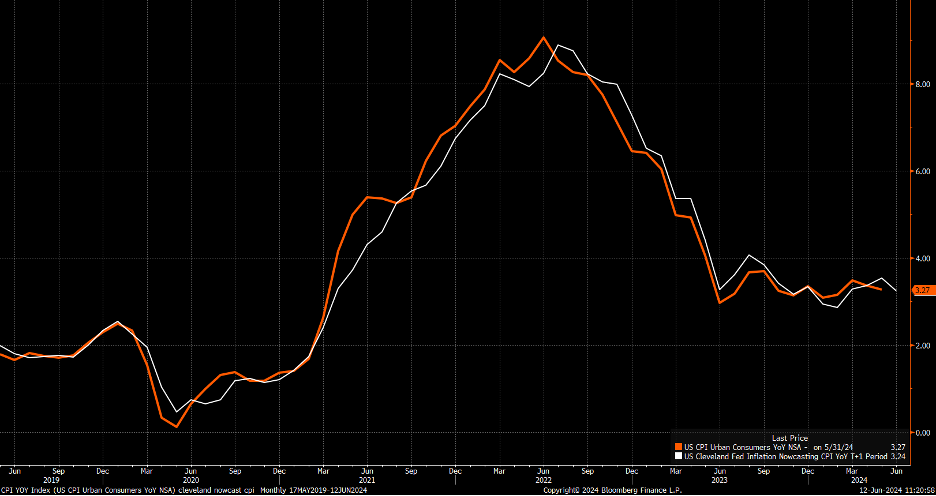 Core inflation has dropped to its lowest level since 2021 and is falling steadily.
Core CPI decreased from 3.6% to 3.4%, the lowest since April 2021. This is the second consecutive month that core inflation has dropped by 20 basis points, following six months of smaller declines.
Core inflation is at its lowest in three years, and the pace of decline is quickening. This suggests core inflation could fall back to 2% later this year: 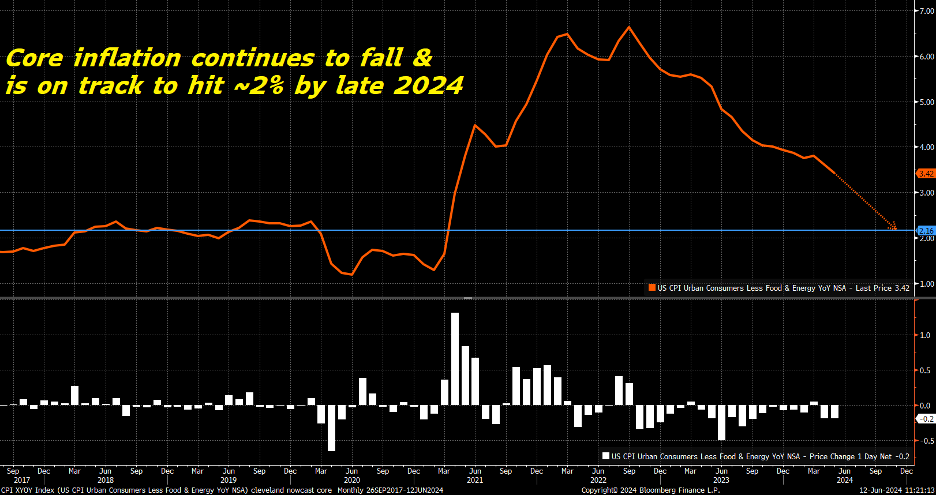 Supercore inflation, which excludes housing, went negative monthly for the first time since 2021. It fell 0.04% month-over-month in May, marking its first decline since September 2021. The Fed closely monitors supercore inflation trends. Meaning that this drop will likely push them toward a rate cut sooner rather than later. Here’s a look at supercore inflation: 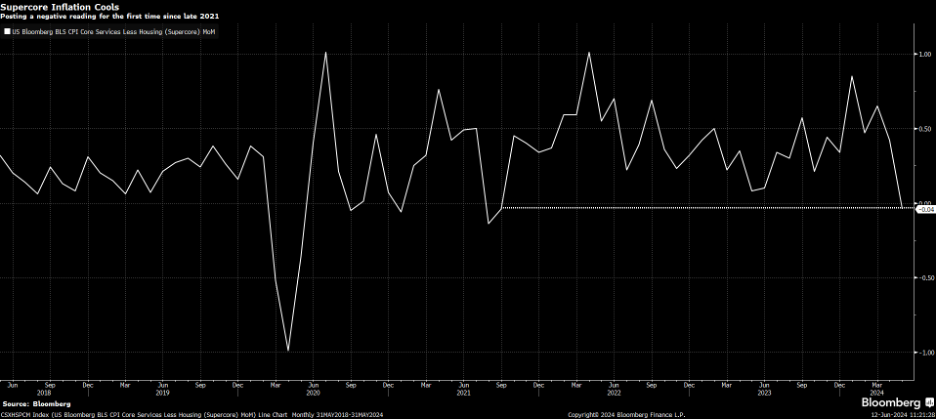 Inflation dropped in May because nearly every line item in the report decreased as a result of broad disinflation.
Food inflation fell from 2.2% to 2.1%. Shelter inflation decreased from 5.5% to 5.4%. Non-core commodities inflation (apparel, alcohol, recreational goods) dropped from -1.3% to -1.7%.
The only major category with a rising inflation rate in May was energy, increasing from 2.6% to 3.7%. However, oil prices collapsed in June, so energy inflation will likely fall.
Overall, we are seeing broad-based disinflation: 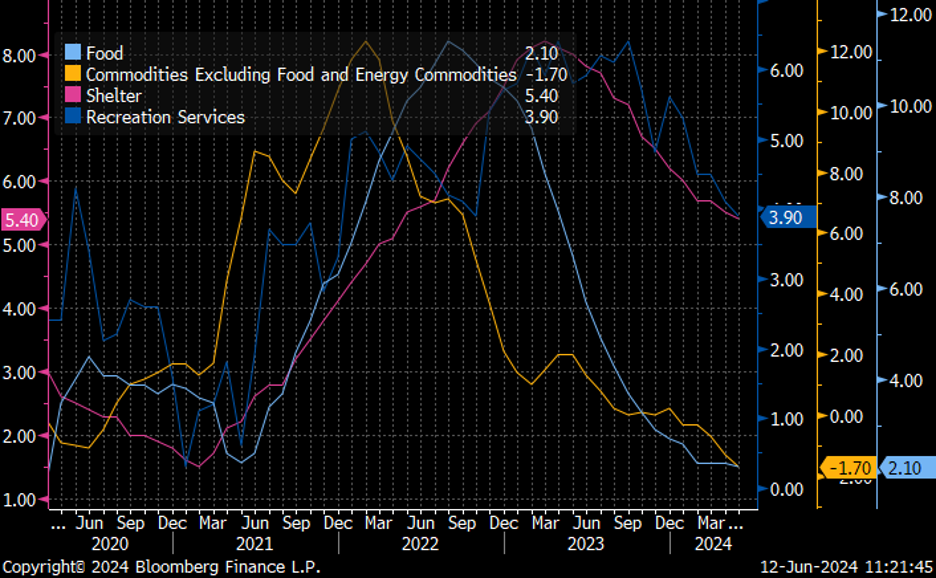 Perhaps most importantly, controllable inflation fell below 2% in May and is back to normal levels.
So we created a new sub-category of inflation called “controllable inflation,” which excludes food, energy, and shelter.
The Fed does not control food and energy prices. They increasingly do not control housing prices because of unique supply and demand dynamics in the market. Therefore, controllable inflation, which the Fed directly impacts, excludes food, energy, and shelter.
Controllable inflation dropped to its lowest levels in this cycle in May, has plunged over the past two months, is running below 2%, and is back to long-term normal levels. By this measure, the Fed has clearly won the inflation battle: 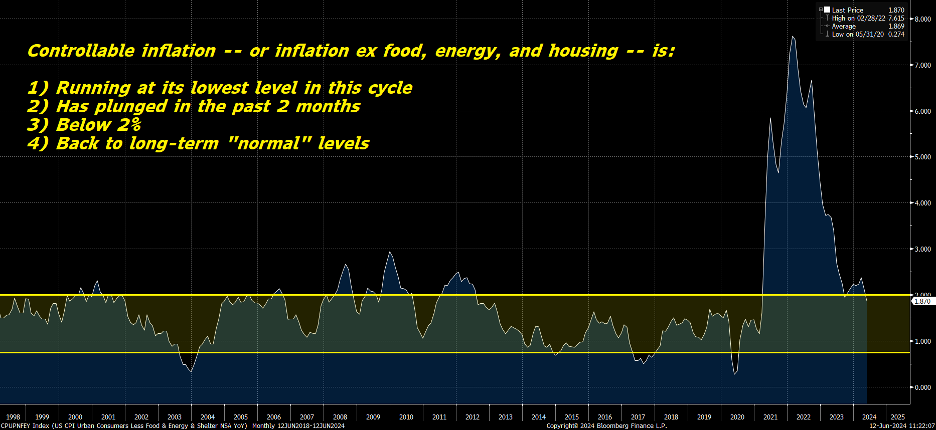 Given these inflation dynamics, we think inflation will continue to fall in the coming months toward 2%, giving the Fed increased confidence that they can and will cut interest rates later this summer.
But what about the Dot Plot?
You may have read that the Fed’s new Summary of Economic Projections, or “Dot Plot,” was hawkish. It reduced the number of rate cuts projected for this year from three to one.
However, those projections were mostly filled out before today’s CPI report. Powell said in the press conference that most members did not update their projections after today’s inflation data. Therefore, the Dot Plot may already be obsolete. |








没有评论:
发表评论