How to avoid them and what to do if you're stuck in one...
Good Morning!
Traders had to deal with a frustrating reality of trading yesterday…
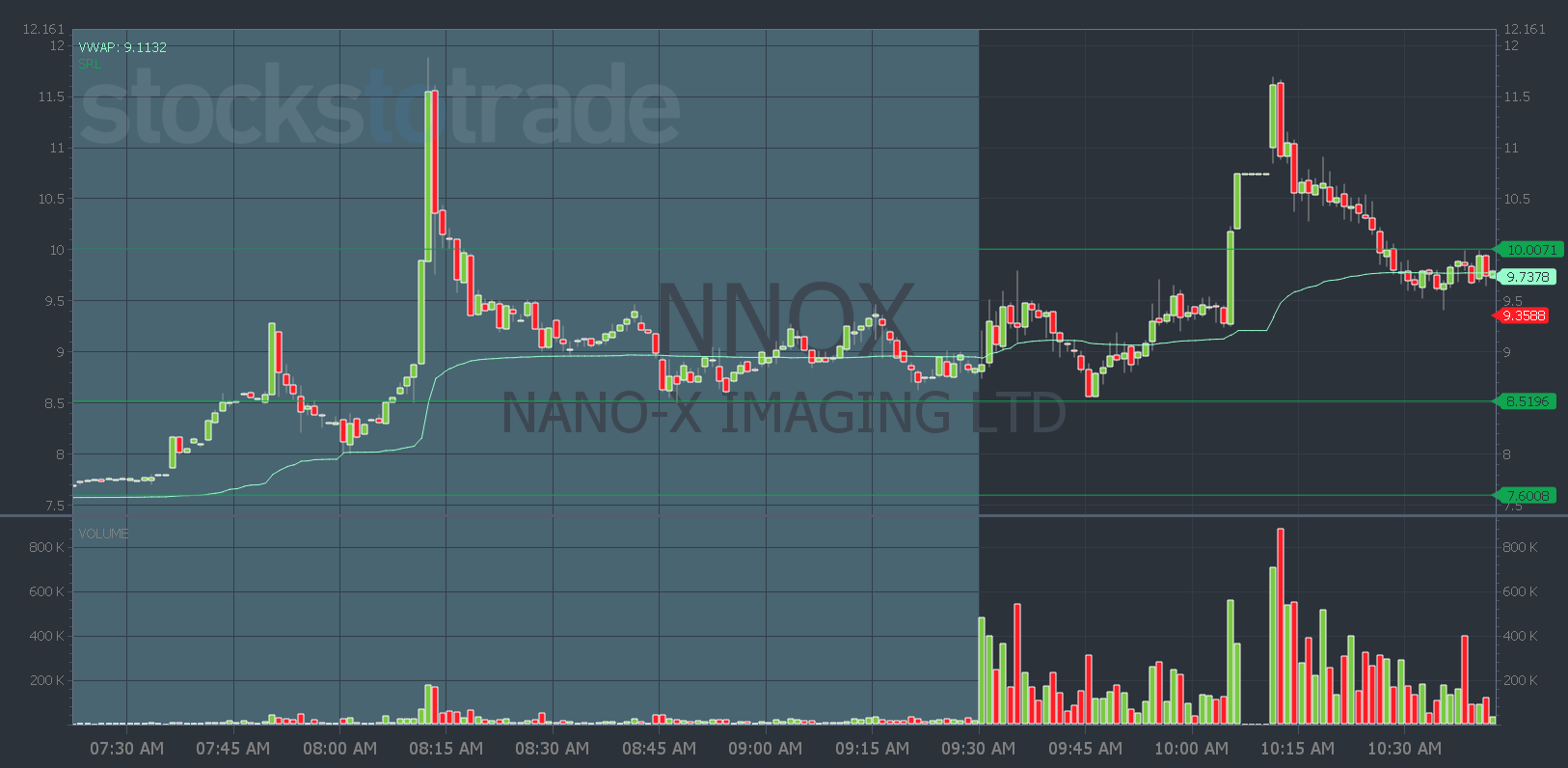
Almost every big gainer in the morning was halted near the open. And getting caught in one is enough to make even seasoned, veteran traders start to sweat…
So what can you do?
Can you avoid halts completely or is there a way to trade around them?
I get a ton of questions about stock halts almost daily…
There are many different kinds of halts — but one you'll deal with more often than most.
So, today I'll share what a volatility halt is, what you can do to avoid them, and what to do if you're stuck in one.
The one you'll typically encounter trading volatile penny stocks is what we call volatility halts. (It's actually called a limit up-limit down halt.)
They occur when a stock has extreme moves outside of an acceptable 'band.' Which means they can happen to the upside and the downside.
These bands are based on a percentage level around the high and low of the stock over the previous five-minute trading period.
And these percentage bands change depending on the price of the stock. For lower-priced stocks a wider band is acceptable. For higher-priced stocks, the percent band is smaller.
Wait until after 9:45 a.m. Eastern to trade. Stocks can halt all day, so this rule won't save you from getting caught in them. But when it comes to low float high volatile stocks, halts will often halt right near the open. Once a stock becomes a 'halter,' you can take it off your watchlist or wait until the afternoon for the stock to calm down.
Avoid trading low-float volatile stocks. This is probably an unpopular opinion because volatility is great for growing a small account. But 'real' stocks can have 10%+ gains in a day too. Look for earnings winners or hot sector stocks with news that are breaking out. Look at Microsoft Corporation (NASDAQ: MSFT) recently after it announced earnings. It also had hot sector artificial intelligence hype.
If you're caught in a halt here's my top tip…
Exit as soon as you can when the stock unhalts. That doesn't mean using a market order to exit. Use your limit order and adjust your price to get out as soon as possible. Even if you're green on your trade — exit and take profits. Because the stock can still have wild moves and halt to the downside as fast as it did to the upside.
I've seen enough new traders get wrecked by holding a stock too long after a halt.
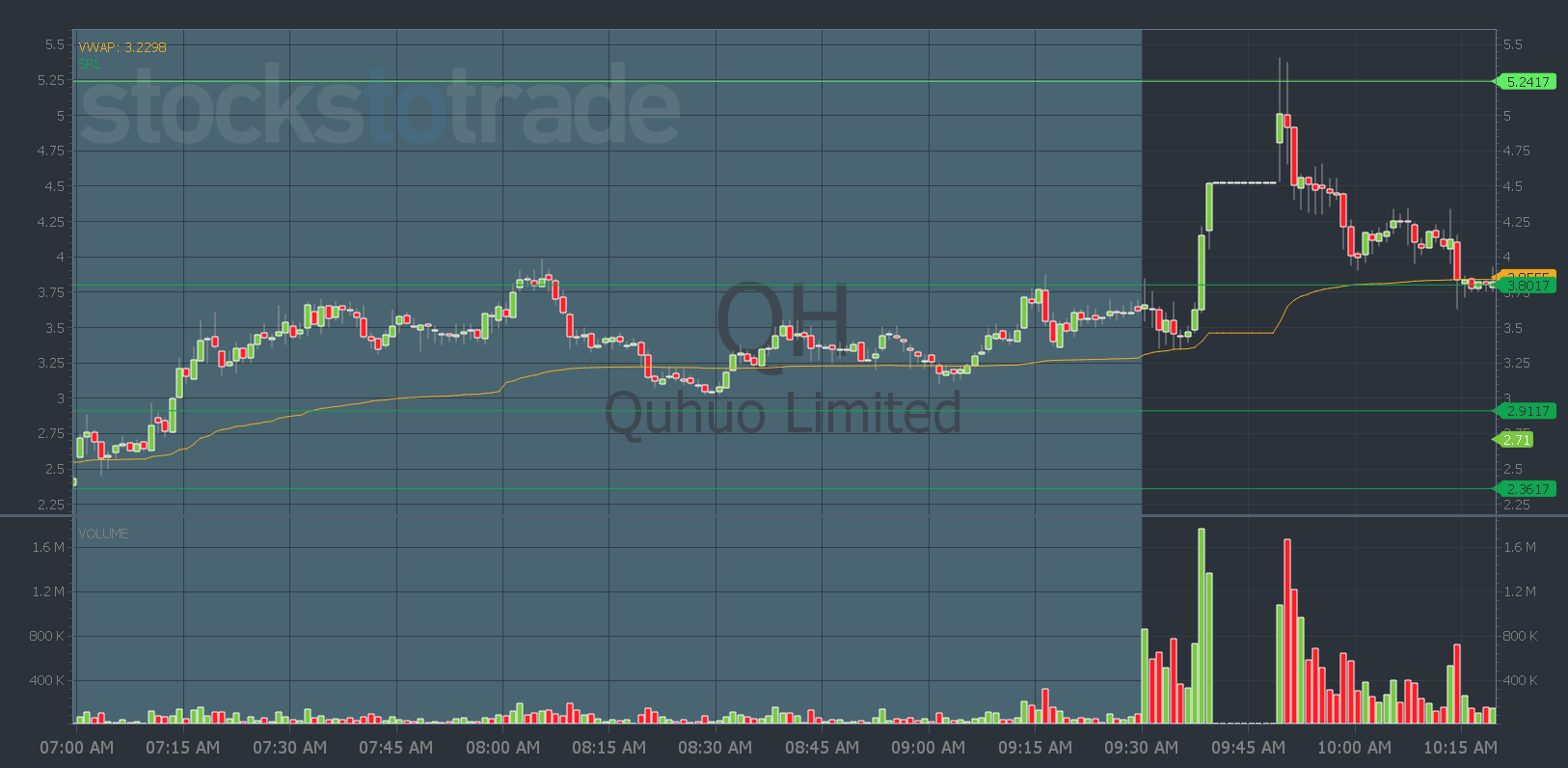
Quhuo Limited (NASDAQ: QH) was a great example of this yesterday…
The stock halted at about 9:40 a.m. Eastern. It gapped up when it opened, then turned into a crap shoot…
You had three minutes to sell after it unhalted before it tanked back below the halt price…
Halts are just one of the inconveniences you have to deal with if you trade volatile stocks.
But you can save yourself a lot of frustration and unnecessary losses if you use a process and rules to guide your trades.
See what you can learn about my trading process when you join StocksToTrade Advisory. I give traders three Market Update Videos per week. Plus, monthly reports, weekly watchlists, and my 10-Pattern ebook.
I hope you'll take advantage of all the resources available to you today!
Have a great day everyone. See you back here tomorrow.
Tim Bohen
Lead Trainer, StocksToTrade
sponsored
sponsored
Is Crypto Gearing Up for Another Massive Bull Run?
Matt Monaco believes so...
That's why he's holding an emergency crypto meeting on April 27th to share the #1 altcoin set to soar in the coming weeks.
(As an Amazon Associate, we earn from qualifying purchases.)
13809 Research Boulevard, Suite 500, Austin, TX 78750
*Please note that these kinds of trading results are not typical. Most traders lose money. It takes years of dedication, hard work, and discipline to learn how to trade, and individual results will vary. Trading is inherently risky. Before making any trades, remember to do your due diligence and never risk more than you can afford to lose.
This is for informational purposes only as StocksToTrade is not registered as a securities broker-dealer or an investment adviser. No information herein is intended as securities brokerage, investment, tax, accounting or legal advice, as an offer or solicitation of an offer to sell or buy, or as an endorsement, recommendation or sponsorship of any company, security or fund.
StocksToTrade cannot and does not assess, verify or guarantee the adequacy, accuracy or completeness of any information, the suitability or profitability of any particular investment, or the potential value of any investment or informational source. The reader bears responsibility for his/her own investment research and decisions, should seek the advice of a qualified securities professional before making any investment, and investigate and fully understand any and all risks before investing.
StocksToTrade in no way warrants the solvency, financial condition, or investment advisability of any of the securities mentioned in communications or websites. In addition, StocksToTrade accepts no liability whatsoever for any direct or consequential loss arising from any use of this information. This information is not intended to be used as the sole basis of any investment decision, should it be construed as advice designed to meet the investment needs of any particular investor. Past performance is not necessarily indicative of future returns.












没有评论:
发表评论