We've been taught to keep work and play apart. Yet more of us are still taking workcations, years into the pandemic – and reaping the benefits. The trend could be here to stay. "After working from home for over a year, I needed a change in atmosphere," says Vedika Bhaia, a Kolkata-based marketing entrepreneur and content creator. Last summer, she and a friend went on a 15-day backpacking trip through India's Parvati Valley, trekking between hostels, exploring the natural environment and paragliding – all while balancing a full workload on a laptop. Though she was used to working remotely, Bhaia says the 'work-from-anywhere' mentality created by the pandemic pushed her to take a trip that combined work and leisure. "I knew travelling would do wonders for my mental health and help me overcome the creative block I was having," she says. Bhaia is not alone; 'workcations' are becoming entrenched in many nations. Workcations combine work and vacation – booking a mountain cabin for a week while working a full-time job remotely, for example – and became popular early in the pandemic, as many knowledge workers fled cramped apartments during lockdowns. Workcations are an evolution of 'bleisure': travel that combines business trips with leisure trips; think of the familiar practice of hanging around a city for an extra weekend after a conference, or tacking on some PTO days while you're away on a business trip. Now, in the third year of the pandemic, even as Covid cases fall globally, there's no sign of workcations slowing down as companies continue to offer remote work policies. Last year, a whopping 85% of 3,000 Indian workers said in a poll that they took a workcation in 2021. Over a quarter of Canadian workers say they want to take one this year; in a global study of eight countries, 65% of 5,500 respondents say they plan to extend a work trip into a leisure one, or vice versa, in 2022. Workcations may seem counter-intuitive – after all, better awareness of work-related mental health stressors has left us more conscious than ever of the importance of maintaining boundaries between our professional and personal lives. Yet experts argue that the adaptability we've developed during the pandemic has positioned us well to enjoy a break that combines work and play. And given the benefits workers see in them – like more chances to explore new places while fulfilling our day-to-day obligations – workcations look likely to become a permanent practice lasting well beyond the pandemic. Remote workers headed to Airbnbs and cottages during the lockdowns of 2020; these 'workcations' have remained popular in the following years (Credit: Getty Images) Remote workers headed to Airbnbs and cottages during the lockdowns of 2020; these 'workcations' have remained popular in the following years (Credit: Getty Images) 'Recharged and re-enthused' Before Covid-19, some white-collar workers were already taking advantage of bleisure travel. "I'm actually all for bleisure. I think it's awesome. It gives people a chance to experience things they might not normally get a chance to experience," says Martha Maznevski, professor of organisational behaviour at Western University, Canada. She regularly adds extra days to business trips, combining travel and relaxation with networking or developmental activities, like a cooking or language class. What's different now is that far more people can dip their toe into bleisure and workcations. Even if you don't travel for business (and few of us are; business travel plummeted during the pandemic and isn't expected to make a full recovery until 2024, partially due to companies avoiding health risks for employees), the fact that remote and flexible work is so much more entrenched means that people who used to spend all their time at their desks now have more scope to explore other options while fulfilling their professional responsibilities. I think after the past two years, we can switch from one thing to the next very effectively – Rachel Fu Andy Drane, a senior equity partner at an Edinburgh-based corporate and communications law firm, said he "wouldn't have considered [a workcation] possible" before the pandemic. "Colleagues, clients and intermediaries would have expected me to be in the office 24/7 or visiting their places of work." Now, he says, that's been turned on its head. "The business has proven itself to be much more flexible than I'd anticipated." Drane went on a workcation last month to England's Lake District. He was there to care for elderly family members but was also able to enjoy the location as he worked remotely. "I was able to have some downtime in a glorious environment and also to fit into a different pattern of days; taking longer over lunch, breaking earlier and cooking dinner for family, taking them on a couple of day trips," he says. "I certainly came back recharged and re-enthused." Research released last month by a US travel services company suggest Drane's experience is common. In a survey of 1,000 people who had taken a workcation, more than four-fifths of them felt the trip had boosted their productivity and creativity, and helped them cope with work-related stress. More than two-thirds said the purpose had been to recharge their mental and emotional batteries, while exploring new places also scored highly as a motivating factor. 'We've all been trained to switch' The apparent popularity of workcations may seem at odds with the deeply entrenched idea that we should keep work and play apart – and carefully ringfence time for each. After all, attempts by companies to bring 'fun' into the office – think ping pong tables, foosball, bean bags – have long been dismissed as gimmicky. But the key attraction with workcations is that workers are capitalising on new-found flexibility to combine work and play in a way that's meaningful to them. Maznevski and other experts see bleisure and workcations as an example of work-life integration, a concept they suggest is more realistic than striving for 'work-life balance', where work and play are positioned in competition. Opting to work from a cabin for a week means you're deciding how, where and when you want to incorporate your leisure time into your work, rather than trying to keep the two realms separate. Maznevski points out that for centuries people lived and worked out of the home; only recently have we "been able to even conceive of something called 'balancing' those things". Workcations, she suggests, could be our way of recognising "there are elements of work and life that integrate with each other". We've been trained to keep work and play separate, but experts say the pandemic has showed us how to integrate the two in ways many of us find meaningful (Credit: Getty Images) We've been trained to keep work and play separate, but experts say the pandemic has showed us how to integrate the two in ways many of us find meaningful (Credit: Getty Images) Of course, there may well be some people who prefer to commit fully to either work or play, rather than combine the two activities. Rachel Fu, professor of tourism, hospitality and event management at the University of Florida, US, says that whether people enjoy the workcation experience will depend on "a variety of individual personalities and behavioural choices"; some may feel they are only on holiday if they are totally unplugged from work, for example. But Fu suspects that many white-collar workers have developed the skills needed to pull off workcations during the pandemic. "Our behaviours have been forced to change," she says. "Home is school, home is where we work. We have all been trained to switch: 'OK, now we have a Zoom meeting'. I think after the past two years, we can switch from one thing to the next very effectively." That doesn't mean that workcations should replace actual holidays, however. People need time away from work; workcations should complement paid time off, rather than serving as a substitute – otherwise, risk of work-related stress and burnout could increase. An Expedia survey released in February showed that while 78% of Americans aim to feel 'unproductive' during holiday, half bring their laptops and 41% dial into Zoom calls. Many are not happy about it: 61% of respondents said they didn't consider trips which combined work and play to be proper holidays. This suggests that many people still value work-free vacations, but struggle to pull them off. Workcations also raise equity issues, even after the pandemic further recedes; not everyone can work remotely or afford a week in rented accommodation. Increased workcations or bleisure "could actually create more of a divide in organisations between people who have location-specific jobs, and people who don't", warns Maznevski. But she says the trend could also give people opportunities they might otherwise not get; whether that's adding an extra day to a business trip to explore a city you never imagined visiting or boosting mental wellbeing through a week in a natural environment even though you've used all your paid holiday allocation. Manage your expectations Given the level of interest from workers now accustomed to staying productive in multiple environments, workcations look like a practice that's here to stay. "As long as you deliver, many companies don't care [where you're working from]," says Fu. Accommodating workers will be in companies' interests; it's already clear that flexibility will be key to worker retention moving forwards, especially as the new generation of workers, in particular, value the ability to work from anywhere. According to a January 2022 survey conducted by Kayak and YouGov, 38% of Canadian Gen Z workers plan to take a workcation in 2022, Kayak tells BBC Worklife; a higher percentage than older cohorts. Both Bhaia and Drane are planning on taking more workcations. In fact, Bhaia has already been on another 20-day workcation and has a new one planned for March. She points out that would-be workcationers need to go into their trip with realistic ambitions. "You can't go into a workcation expecting the rest and relaxation you get from a regular getaway," she says. "Expect to be busy if you want to explore your surroundings while managing work at the same time." She recommends planning ahead, taking longer stays to accommodate enough time for both work and play, and if you're going with travelling partners, pick people who have the same goals as you. "Vacationers and workcationers don't mix," she cautions. Drane says he used to think that the professional and the personal should be kept separate. But when changes to how we worked during the pandemic allowed him to combine doing his job with spending important time with his family in a rural environment, he became a workcation believer. "The beauty for me of the workcation," he says, was that he was able to fulfil professional duties "whilst allowing me to spend meaningful time with my family". He's booked his next workcation back to the Lake District for October, and says both he and his staff will continue to benefit from this new flexibility. "In the past, people often had to wait until retirement to do the things they'd dreamed of," he says. "That's no longer necessarily true, and I plan to take advantage of that." One study shows that in mid-2020, the digital-nomad population in the US exploded 50% from 2019, up to 10.9 million from 7.3 million. And, as more workers turn nomadic, the lifestyle has mainstreamed: telling your family or company you want to move around while you work might have drawn sceptical looks in the past, but the idea doesn't seem so far-fetched now – especially as some companies are increasingly allowing their staff to work remotely indefinitely. Data on worker desires chimes with this increased interest in digitally nomadic lifestyles. Surveys around the world have shown that most workers want to continue to work remotely in some way – be that at home, at a seaside cottage, at a ranch house in a far less pricy suburb than the city they were living in before or in a different country altogether. "I don't see any reason why that wouldn't continue to be the case in the future," says Robert Litchfield, associate professor of economics and business at Washington & Jefferson College, US. He is the co-author of a book about digital nomads with Rachael Woldoff, professor of sociology at West Virginia University, US. They point out that any shift towards nomadism would be in line with trends that emerged long before the pandemic: a survey of 15,000 Americans back in 2017 showed that 43% were already working remotely at least some of the time, a number that ticked up 4% from 2012. "People don't live where their work is, but work where they live – that was the idea" that was reinforced during the pandemic, adds Olga Hannonen, a postdoctoral researcher at the University of Finland who studies digital nomads. But, although interest is skyrocketing, and some workers are actually trying on nomadism, some experts are sceptical that the workforce will suddenly be filled with permanent digital nomads, as daily life in many countries starts to stabilise. Even if there is a mass shift towards digital nomadism, the move won't be demographically equal "This idea that people are going to be long-term nomads is very unrealistic," says Erin Kelly, professor of work and organisation studies at the Massachusetts Institute of Technology. "I think most people want to have homes and know their neighbours, and be based in a certain place." While she expects that some industries will welcome nomadism among staff – sectors like IT that already have a global labour chain, she says – "I don't think we're going to see that writ large". Unequal playing field Even if there is a mass shift towards digital nomadism, however, the move won't be demographically equal. The opportunity and ability to slip into an on-the-go working lifestyle simply isn't available to everyone. "To be a digital nomad, you need to have tremendous freedom – you need to have a good passport, you can't have a criminal record, you can't have too much debt," says Beverly Yuen Thompson, associate professor of sociology at Siena College, New York, who studies digital nomads. She says this has been the case for traditional digital nomads all along, even if they don't make much money, or moved abroad because they couldn't afford their home country. "These people don't think that they're rich, but if your family can send you a plane ticket to bail you out if you're in Thailand and you're in a tough place, that's a huge privilege." "With every study about digital nomads, this question [of inequality] is raised," says Hannonen. "At the moment, being a digital nomad is a very Western phenomenon of people who can travel the world,"; becoming one is a symbol of a "privileged lifestyle". It's easier for some people to become digital nomads, and harder for others, domestically or internationally, pre- or post-Covid-19. Thompson believes that if more of the workforce became nomads, this would reinforce inequality. Because of deep systemic inequalities that have existed for decades that have led to poorer people and people of colour being put on a track the leads to worse education levels and worse-paying jobs, they're less likely to find a job that allows remote work in the first place, let alone allow them to work long-term in a different location. A full-scale nomad workforce could just keep that cycle going, giving more privileges and perks to already privileged people. Being able to travel and work remotely in a different city or country is a privilege, which is why widespread digital nomadism is inaccessible to all, experts say (Credit: Getty) Being able to travel and work remotely in a different city or country is a privilege, which is why widespread digital nomadism is inaccessible to all, experts say (Credit: Getty) And even among the well-paid, white, knowledge-economy workers that make up the majority of teleworkers, the only people who could truly become digital nomads – who maybe live in a far-flung locale and then come into the office once or twice a quarter – are senior-level executives, explains Susan Lund, a partner at Washington, DC-based McKinsey & Company who researches labour, economic development and remote work. Companies will be more willing to accommodate the powerful, high-earning top brass, she says. That may depend on the situation, though – Litchfield and Woldoff say they interviewed more junior workers for their book who were surprised to get retention offers from their bosses when they said they'd quit if they couldn't work remotely long term. Still, digital nomadism aside, Lund says that based on McKinsey research, "60-70% of the workforce has zero opportunity" to work remotely at all. Most people are "cutting hair, they're caring for patients, they're in a manufacturing setting where you're working machinery or in a laboratory working with specialised equipment". "Definitely, there is an issue of equity," says Lund. "It is college-educated, office-based, white-collar workers predominately that can do this." The more realistic outcome Experts say that some industries definitely will have more digital nomads among their staff after the pandemic. But they add that a huge shift towards digital nomadism across the board probably won't happen. A more likely outcome is that more workers might end up in situations where their organisations implement a hybrid work schedule that forces them to come into the office at least sometimes, and workers might relocate based on that requirement. If people do want to relocate, Lund believes it'll just be a bit further away from the office, but still in commuting distance. "I think there is this [trend of people] spreading out to smaller towns and rural areas – but still not, 'I want to go to Croatia' or 'I want to live in Aspen'," she says. Even if the number of people who can live indefinitely in a Lisbon Airbnb for months on end increases after the pandemic, the privilege to do so still remains only with tiny group. Overall, says Kelly, "I would say 100% remote work is a possibility for some employees, and maybe feasible in some industries, but it's not going to become the new normal." Correction 4 Aug 22: This article inaccurately reported the results of a survey on remote work. This has been removed. |
Sometimes, colleagues of Informed Investor Decisions share special offers with us that we think our readers should be made aware of. Below is one such special opportunity that we believe deserves your attention.
|
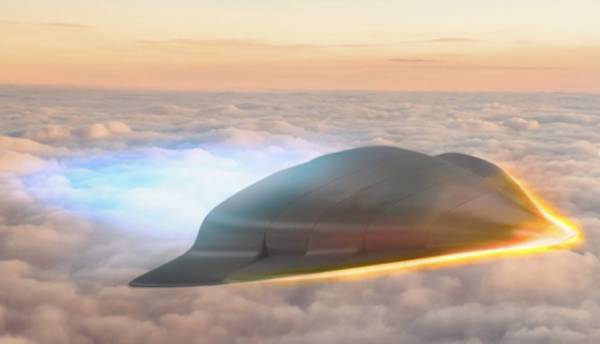
| New Weapon Could Change Warfare Forever | | |
If the pandemic has taught us anything about work, it's that we don't need to be pulling long hours in an office to be productive. So, why is presenteeism still so important? A As we head into 2022, Worklife is running our best, most insightful and most essential stories from 2021. When you're done with this article, check out our full list of the year's top stories. It's almost hard to imagine a time in which people spent at least 40 hours a week in a physical office (and often even longer to impress the boss). But in the pre-pandemic workforce, this kind of 'presenteeism' – being physically in your seat at work just to look dedicated, no matter how unproductive – was just another fact of office life. Before the pandemic, data from one UK survey showed that 80% of workers said presenteeism existed in their workplace, with a quarter of the respondents saying it had got worse since the prior year. But now, remote work has provided bosses and workers alike with an overdue opportunity to re-evaluate this ingrained presenteeism. We've long known presenteeism is problematic: it can cost a nation's economy tens of billions of dollars as sick people drag themselves into the office and infect others; it creates toxic environments that lead to overwork, as people putting in long hours piles pressure on everyone else to do the same. We know it's productivity that matters, not being chained to your desk or computer – and it's a conversation we've been having for years. Yet, despite a golden chance to ditch the practise amid a new work world, the emphasis on presenteeism is alive and kicking. Now, presenteeism has simply gone digital: people are working longer than ever, responding to emails and messages at all hours of the day to show how 'engaged' they are. And, as bosses call workers back into the office, evidence is mounting that we perhaps haven't moved the dial on presenteeism at all. So, despite what we know, why is presenteeism still so emphasised? It's not simply that bosses are hungering to hover over workers as they toil. Rather, subconscious biases keep the practise intact – and unless we do a better job acknowledging its harm, and set up workplaces to discourage it, we're likely to be slaves to presenteeism forever. Why managers still fall for presenteeism Clinging to a presenteeism culture just favours those "who have the time to show up early and leave late", says Brandy Aven, associate professor of organisational theory, strategy and entrepreneurship at Carnegie Mellon University's Tepper School of Business, US. Aven also points out that this can unfairly favour some workers over others – parents may have no choice but to leave early, for example. Yet as bad as presenteeism is, there are some indications that people who don't put in face time may actually get penalised. For example, although almost unfathomable now, telecommuting has generally been stigmatised as irresponsible, and has subsequently held some workers back. A 2019 study, for example, found that telecommuting workers who worked at companies in which remote work was unusual experienced slower salary growth. Presenteeism has been long ingrained in office culture, even though research shows that working extra hours doesn't actually equate to more productivity (Credit: Getty Images) Presenteeism has been long ingrained in office culture, even though research shows that working extra hours doesn't actually equate to more productivity (Credit: Getty Images) These factors can alarm workers, many of whom have come to fear that a lack of physical office presence will stunt success. And the normalisation of remote work amid the pandemic hasn't necessarily changed this; in 2020, researchers from human-resources software company ADP found that 54% of British workers felt obliged to physically come into the office at some point during the pandemic, especially those in their early-and mid-careers, despite the rise in flexible working. Leigh Thompson, professor of management and organisations at Northwestern University's Kellogg School of Business, US, says there are two key psychological phenomena that fuel presenteeism. The first is the 'mere-exposure effect', which holds that the more a person is exposed to someone or something, the more they start to grow affinity. "If I've seen one person 10 times for every one time I've seen somebody else, I'm just naturally going to like them more," explains Thompson. If a particular worker makes themselves more visible, they may naturally ingratiate themselves to others just by being there – even if the others don't realise it, or can't pinpoint what is it they like about the 'presentee'. "[You might say],'I don't know, I like their smile, I like their attitude – they're leadership material'," says Thompson. And, before you know it, the presentee might get a raise or promotion. This bias exists alongside another psychological concept called the 'halo effect': associating positive impressions of someone with their actual character. "You start to think of the person who's bringing you coffee or asking about your weekend as maybe 'a sweet guy' – but then I take the mental step of thinking you're a productive worker, too," says Thompson. "You're nice, and then I immediately bloom that out to, 'the guy must be a hard worker as well' – even though you've given me no evidence in this coffee-cup situation to make me think that you're a hard worker." This can lead to promotions or other benefits going to in-person workers. Showing up for the sake of it Ironically, despite the potential rewards of showing your face at the office, workers aren't actually necessarily more productive when they're putting in that face time or working overtime. Still, workers feel the need to perform – both in person and now digitally – since managers don't necessarily know their workers aren't actually accomplishing anything extra. In fact, during the pandemic, the number of hours worked around the world have gone up, not down. In 2020, over the course of the year, average daily working hours increased by more than a half hour on average. The idea is, if everyone else is online, I need to be, too. Many bosses only see the most visible people, so they assume those are the most productive employees. As bad as presenteeism is, there are some indications that people who don't put in face time may actually get penalised This is a relatively new problem. Back when the economy was more manufacturing-centric, it was easier to measure tangible outcomes: this gets built, this doesn't. But "as we've shifted to a knowledge economy, it's much squishier to measure what output actually looks like", says Scott Sonenshein, professor of organisational behaviour at Rice University's Jones Graduate School of Business in Houston, Texas. So, in lieu of something measurable, managers tend to think workers are producing as long as they're at their desks. Workers know managers value this visibly – and so they fall into the presenteeism trap, especially as they see their peers doing the same. This is especially true in times of economic instability – such as we're experiencing right now, due to Covid-19 – when workers fear the stability of their jobs. They work because they want to prove they can tough out stress and excel, as well as be reliable. However, this ultimately backfires, since the quality of workers' output suffers as a result of this rush to perform. In the UK, for instance, 35 workdays are lost per worker per year in the UK due to presenteeism, and research also shows that productivity plummets after working more than 50 hours a week. How to stamp out presenteeism Now, in an era in which work practices have undergone seismic transformations, and have triggered unprecedented scrutiny, there's an urgent need to reduce the emphasis on presenteeism, both physically and digitally. Even though more workers don't have a place to physically be present, many still feel like they need to be virtually present at all times. But, like burnout, which also fundamentally threatens the way we work, fixing huge, existential issues including presenteeism requires a big, top-down overhaul of what's valued in the workplace and why. |
The Pentagon plans to spend an extra $37.2 billion on next-gen weapons over the next 12 months.
And they've been moving fast.
The Army awarded $2.2 billion in contracts on June 27...
The Air Force awarded $950 million in contracts on July 1...
The Navy awarded $350 million in contracts on July 19... |
|
|
From time to time, we send special emails or offers to readers who chose to opt-in. We hope you find them useful. Email sent by Finance and Investing Traffic, LLC, owner and operator of Informed Investor Decisions. To ensure you receive our emails in your inbox, be sure to whitelist us. © 2023 Informed Investor Decisions. All Rights Reserved. Thinking about unsubscribing? We hope not! But, if you must, the link is below. 221 W 9th St # Wilmington, DE 19801 Privacy Policy | Terms & Conditions | Unsubscribe |
|
|
|




没有评论:
发表评论